Tuesday, October 13, 2009

Peter & Max by Bill Willingham


Peter & Max: A Fables Novel by Bill Willingham with illustrations by Steve Leialoha is released today. This is the first novel inspired by the popular Fables graphic novels. This franchise only appears to be growing, so congrats and kudos to the writers and artists. I can't believe it has been seven years now.

Since I haven't had the pleasure of reading the novel myself yet, I thought I would share some reviews from elsewhere.

First an article with interview though: PETER & MAX - Bill Willingham Takes FABLES to Prose.

Over the last seven years since the award-winning, best-selling series began, Fables has broken a lot of the unwritten rules of ongoing comic book series. Readers have seen characters evolve and change, the series premise completely turned upside-down, its main setting destroyed and some of the most beloved characters die.

Now the rulebook gets tossed out altogether as series writer Bill Willingham has written his newest Fables story in a novel published by DC's Vertigo imprint. Peter & Max, a 389-page hardcover book, is being released this week with the subtitle: "A Fables Novel." Although there are a smattering of illustrations by Steve Leialoha running through the book and an eight-page mini-comic in the back, the main story itself is written entirely in prose.

And some reviews:

Review: Grimm and bear it, 'Peter & Max' is an adult fairy tale worth reading by Randy Myers

More Brothers Grimm than Mother Goose, "Peter & Max" creates a captivating mythology that can be easily followed even by those unacquainted with the comics. Surely, if you are a "Fables" follower, you'll get more out of it, but great pains have been taken to entice the uninitiated to the series. As a bonus, a few of Steve Leialoha's illustrations set the whimsical mood.

"Peter & Max" Modern Day Fable Brings Back Happily Ever Afters by Graeme McMillan

As it turns out, I needn't have worried: Despite a somewhat awkward start (Where, yes, Willingham veers close to killing momentum and interest through world-building for people who've just come in) and seemingly rushed climax, Peter & Max distills all of the charm and sly, subtle invention that Willingham has brought to the familiar characters in the series so far into an all-new story that sidesteps the comic's continuity for the most part, offering something that's familiar enough to reassure old faithfuls, but also unencumbered by a past that would scare off newcomers.

Peter & Max: A Fables Story Review by Richard George

To the extent that Willingham creates a stirring, memorable rivalry, there is little to critique. By the end of the book, it will be hard not to be mesmerized by these two individuals and their ultimate fates. Some sequences, both in the past and present, are downright brilliant, and the advantages of a prose medium are clearly demonstrated. Scenes are able to play out at a more leisurely pace, and chapters can cut away to a different moment in time to leave the reader in suspense. And the payoff to some of these cliffhanger chapters is superb. What wasn't as effective was the development of one of the main characters.

So overall a strong response and recommendations for both fans and those who are unfamiliar with Fables. If you are wary of graphic novels--they require a different setting of the brain for me, I admit--this may be the way to be introduced to the mad, crazy world of fairy tales as envisioned by Bill Willingham and Company.

The Nightingale in Dutch


Just to show that fairy tale books still win awards in other countries, too, here's an article: Flemish writer wins children's book award

Flemish writer Peter Verhelst has won this year's Gouden Griffel (golden slate pencil) award for the best Dutch language children's book for Het geheim van de keel van de nachtegaal (the secret of the nightingale's throat).

The book, a reworking of the Hans Christian Anderson fairytale, is Verhelst's first children's book. He has already published eight volumes of poetry and five novels.

Of course, I tried to find more and discovered this description in English since my Dutch, well, I don't have any Dutch....

Bozar Book Shop description:

In fairy tales, the dreams and wishes of emperors can be become reality with a snap of a finger. In 'The secret of the nightingale's throat' a Chinese emperor dreams of a new Imperial Garden of Gardens. A simple gardener does his very best to make this dream come true. Whenever the emperor hears a nightingale, he knows that its music must also be a part of his garden. The nightingale is willing, but has a will of its own. His music is unique, but cannot be caught. Can the almighty emperor live with the idea that that there is something that excapes his will?

Peter Verhelst has adapted H.C.Andersen's well-known fairy tale into a musical and poetic text. Carll Cneut lets the reader meander through a magical beautiful world.

You can also read more about Peter Verhelst on Wikipedia. (It doesn't mention this book or his award, but someone will probably fix that someday.)

And I believe this is another illustration from the book:

Monday, October 12, 2009

The Guardian Fairy Tales: 'Rags to Riches' and 'Love'


Today's fairy tale booklet (Day 3) at The Guardian is themed Love. You can read more about the seven part series at my previous post.

Love in fairytales: AS Byatt looks at the abstract world in Fairytales

Here's a lovely excerpt:

One of the pleasures of the tales is the brilliant mosaic they offer of isolated things and materials. Loaves of bread, magic swords, frying pans, spindles, necklaces, shoes. And these things have brilliant colours – the Swiss scholar Max Lüthi has remarked that they also have a restricted range – red, black, white, gold and silver. Materials shine – a glass mountain, golden coins spouting from the good daughter's lips. Materials contaminate – a bad daughter has slimy toads springing from her lips. Pitch defiles. Blood wells up and betrays crimes. Birds glitter and shimmer and sing significant songs. The animal world is a close extension of the human world – bears help (or devour), foxes and deer are helpers or punishers, fish speak from lakes and birds help in the sorting of seeds or peck out the eyes of the wicked. It is a mosaic world capable of endless retelling in varied ways.

The issue also includes three fairy tales to fit the theme:

The fairytale of Rapunzel by the Brothers Grimm

The fairytale of the Steadfast Tin Soldier by Hans Christian Andersen

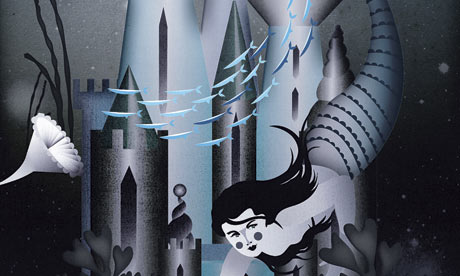
The fairytale of the Little Mermaid by Hans Christian Andersen


The illustrations for this set are by Emily Forgot. They are once again lovely, but I am amused that so far the least "romantic" style of illustrations was used for the "Love" themed collection. Interesting juxtaposition...

Yesterday's issue, Day 2, was themed Rags to Riches.


Rags to Riches in fairytales: Philip Pullman looks at the power of symbolism in fairytales The fairytale of Mossycoat

Here's an excerpt from Pullman's essay:

Bettelheim's point is that fairytales such as this symbolise genuine aspects of our psychological life – moments of transition from innocence to knowledge, and so on – and that they are invaluable aids to a contented and healthy growth. Children need such tales as much as they need food, warmth, shelter and love. I think I agree with that. But whether or not they're psychologically necessary, the greatest tales (and Cinderella is one of the greatest of all) derive their lasting power not only from the multitude of fascinating and unforgettable details that abound in them but from the emotionally satisfying shape they take up. In the Grimms' collection, for example, tale after tale begins enthrallingly and then collapses half way through: rather like most films, most novels, most plays, in fact. The hardest thing with a story of any kind is to bring it to a conclusion that works every time you read it. The best of the Grimm tales do that, and the ones that work best of all are clearly the work of some ancient and anonymous teller of genius, whose power of shape-creation has resisted generations of hamfisted clumsiness and mishandling.

Once again, the issue includes three fairy tales to fit the theme:

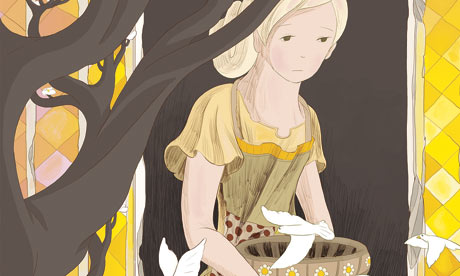
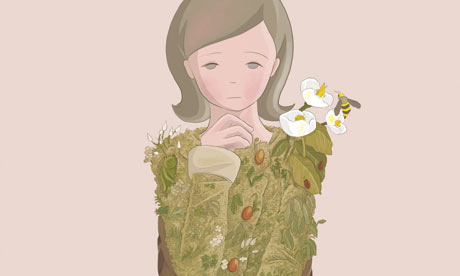
The fairytale of Mossycoat, an English folk tale, retold by Philip Pullman

The fairytale of the Tinderbox by Hans Christian Andersen

The fairytale of Cinderella by Charles Perrault

The illustrations for this set are by Heisuke Kitazawa.


This is really quite exciting. It's especially nice to have a new Mossycoat on the internet....

On the Slant: Robert Southey

The letters of Robert Southey to go online

In his own lifetime Southey was a highly contentious figure: a polemical poet, essayist, biographer and historian, whose youthful support for the French Revolution mutated into reactionary Toryism. An enthusiastic supporter of the radical feminist Mary Wollstonecraft, he once urged Charlotte Brontë against embarking on a literary career. Southey was an antagonist of Lord Byron and Percy Shelley; a direct contemporary and rival of his fellow 'Lake Poets' Samuel Taylor Coleridge and William Wordsworth; and the correspondent of campaigners such as William Wilberforce. A prolific author, his works included a best-selling biography of Nelson and the fairy tale 'The Three Bears'. Yet although Southey was someone contemporaries found it absolutely impossible to ignore, his reputation was eclipsed in the latter half of the nineteenth century and he has only very recently started to attract scholarly attention.

So he deserved to lose some friends, especially over the Charlotte Bronte snub, but he made important contributions that we must recognize.

The real reason I'm posting here is that I wonder if anymore folklore appears in his letters....or even discussion of his Three Bears. Or read SurLaLune's Annotated Goldilocks if you prefer, since she is NOT in Southey's version.

I love the way the internet makes so much information available to us that would be nearly impossible to access otherwise. That was why I started SurLaLune and while many other sources have arisen over the years and I've tried to adapt somewhat to the changes and expansion of sources, I'm proud to be part of the sharing.

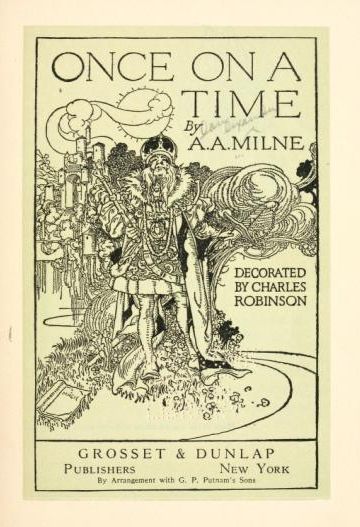
Once on a Time by A. A. Milne


Found this short and unexpected review by Lee Randall a few weeks ago: Uncommon readings: Fairytale best read by adults.

It's a nice review for an old book, Once on a Time by A. A. Milne, the author more famously known for Winnie the Pooh. (As if you didn't know that!)

The review is informative enough that I had to find the book. It was harder than one would think because the TITLE is never mentioned in the review. (Although that's comforting when I consider all the mistakes I make as my own writer and editor...)

Here's a quote from the review:

If you too have a low threshold for Pooh, Piglet and the rest, you may have missed Milne's other work. I urge you, rethink this boycott. Instead, the next time you want to laugh out loud at satire both silly and sharp, pick up this novel, written in 1917 to amuse the author and his wife.

Milne calls it "a fairy story for grown-ups". It's his attempt to address the fact that the conventions of fairy stories don't allow for the shades of grey in real life.

The book is available on Gutenberg at Once on a Time by A. A. Milne.

During my search, I was reminded that Milne wrote a treatment of Cinderella which I have never found. The search continues. It has to be online somewhere. It was published in Punch and I want to add it to SurLaLune.

Here's a helpful paragraph from Answers.com about his fairy tale work.

Like Thackeray's The Rose and the Ring and Dickens's The Magic Fishbone, the handful of fairy tales for adults Milne published in Punch before World War I and included in Those Were the Days (1929) satirized the conventions of the genre. In ‘The King's Sons’, a fairy tests the three sons by transforming herself into a dove pursued by a hawk. The youngest son, kind‐hearted Prince Goldilocks, is prompt with his bow; unfortunately, he is a poor shot, and hits the dove. ‘A Modern Cinderella’ transposes the story to present‐day London. A blasé debutante, Milne's Cinderella, is tired of balls; she kicks off her shoes at a dance—and loses one—simply because her feet are hurting. In ‘A Matter‐of‐Fact Fairy Tale’, Prince Charming sets out to kill the Giant Blunderbus and rescue Princess Beauty's brother Udo, transformed by the giant into a tortoise seven years before. Here, as in the other tales, Milne associates the fairy‐tale tradition with a sentimental and unrealistic view of life and human nature. Udo is unromantically preoccupied by his ignorance of what tortoises are supposed to eat. Prince Charming is disillusioned when the dying giant reveals that Udo is not Beauty's brother, while the lovers, reunited at last, discover that they are no longer attracted to each other.

So if you're looking for a free book to read by a beloved author that plays with fairy tale tropes, try this one.

Sunday, October 11, 2009

The Guardian: Wicked Parents


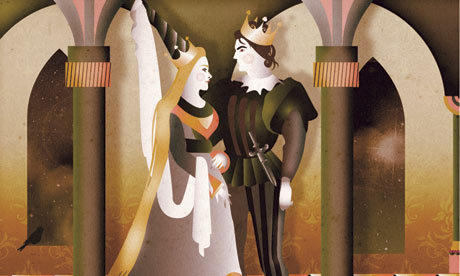
In the UK, the Guardian is offering a series of seven fairy tale brochures in their physical papers with corresponding articles online. So, thank you, we don't have to be in the UK to enjoy the content!


The first day's offering is Wicked Parents feature and offers an article, Wicked parents in fairytales by Booker Prize winner Hilary Mantel and three fairy tales to read, including The Juniper Tree, Hansel and Gretel and Snow White.

It's a fine short article on the topic and focuses on The Juniper Tree and Hansel and Gretel. Still it is timely for me since I just submitted my next Faerie Magazine article about Snow White, the other well-known horrible parenting tale. (More about that in upcoming weeks, of course.)


Here's one paragraph, but there's plenty more food for thought in the article, so click through to read it all:

When we read fairytales now, the tools of psychoanalysis jump to hand, like the animated dish and spoon in the nursery rhyme. But we mustn't forget the historical reality behind the stories. Step-parenting, with its grudges and feuds over right and inheritance, was a fact of life through the ages, and now, because of frequent divorce, has become a fact of life again. Modern families may not be quarrelling over inheritance, but they are still at loggerheads over who gets what share in the parent or child. We don't dismember the child for the cauldron, like the boy in the Juniper Tree, but we shred him by apportioning his time and love: weekdays with mum, weekend with dad. And in step-families, sexual tension is the great unspeakable. In the Brothers Grimm tale, Snow White is a child of seven. Her story makes more sense, of an unpalatable kind, in the versions where she is on the cusp of womanhood, a blossoming rival to her stepmother.

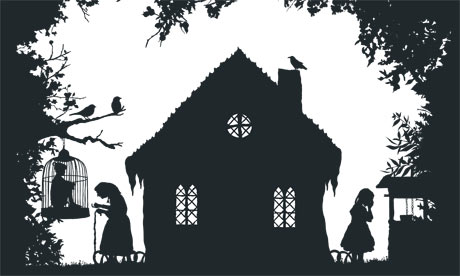
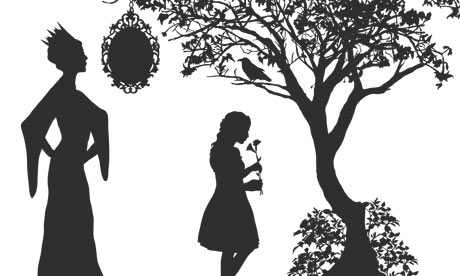
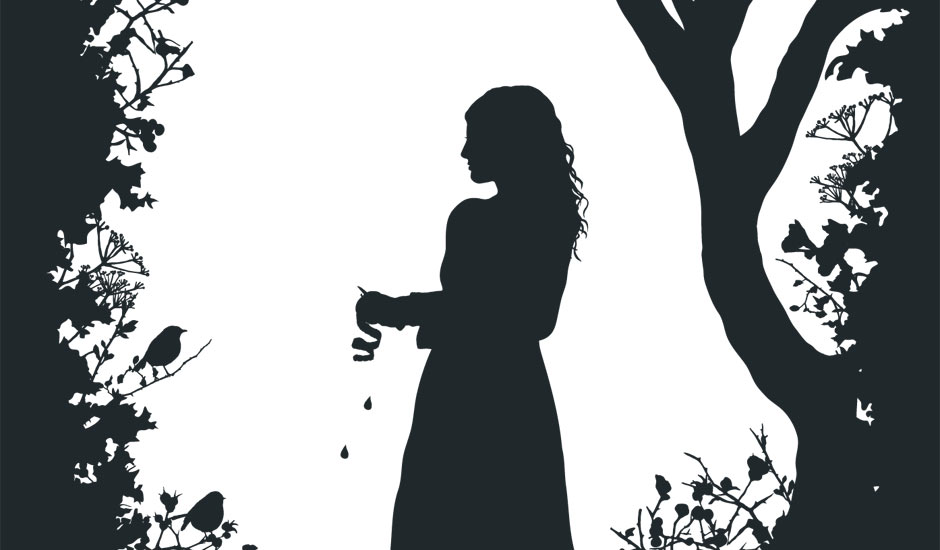
And I love the illustrations for all three tales provided by Laura Barrett. I love silhouette illustrations. They allow for so much detail but still leave plenty of scope for the imagination.

Great fairytales brings you the finest stories of morality, justice, triumph and enchantment from around the world, collected in seven themes: Wicked parents, Rags to riches, Love, Quests and riddles, Wisdom and folly, Justice and punishment and Beastly tales.

The stories are all nominated by a panel of critics, writers and experts on children's literature: Anthony Browne, AS Byatt, Abdulrazak Gurnah, Robert Irwin, Alison Lurie, Adam Phillips, Philip Pullman, Salman Rushdie and Marina Warner.

Each collection is beautifully illustrated and includes an afterword from a range of leading writers exploring each theme.


Edit: The Fairy Tale Cupboard wrote about this series yesterday, too. Great minds again...

Wolf Awareness Week is October 11th-17th


Wolf Awareness Week is October 11th-17th

From the press release, but the links are mine:

Want to know how you can take part in Wolf Awareness Week? Here are some suggestions:

Revisit traditional story tales such as Little Red Riding Hood, The Three Little Pigs, or Peter and the Wolf. Afterwards discuss with your children how these stories unrealistically depict wolves as dangerous and evil.

Click through to the press release to read serious items about wolf awareness week. It's serious even though I'm feeling lighthearted about it here.

And I support anything that encourages rereading fairy tales....and I do think the animals get a bum rap in fairy tales. So combine the traditional tales with The True Story of the 3 Little Pigs! by Jon Scieszka to be fair.

And the SurLaLune Cafe Press Shop has lots of wolf themed items, especially in the Little Red Riding Hood Shop. My husband drew the wolf and wolf shield.

Related Posts Plugin for WordPress, Blogger...
hostgator discount