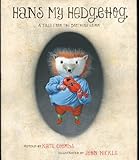
Hans My Hedgehog: A Tale from the Brothers Grimm
by Kate Coombs (Adapter), Brothers Grimm (Author), John Nickle (Illustrator) was released this past Tuesday.
I haven't seen copy in person, but I'm always thrilled with a new picture book featuring one of the less popular fairy tales. Hans My Hedgehog is a sentimental favorite of many fairy tale fans and hopefully this book will also introduce the tale to a new audience.
Book description:
A classic tale of love and acceptance from the Brothers Grimm is beautifully rendered in this magical retelling.Hans is an unusual boy. Born a hedgehog from the waist up, he knows what it’s like to truly be an outcast. Even his amazing fiddle playing can’t help him fit in. So Hans flees to the forest with his herd of loyal pigs and only his music to keep him company. But then a most unusual thing happens: When Hans crosses paths with two kings with two lovely daughters, his luck starts to change. Will this lonely soul find true love after all?
This lively and lyrical retelling of the classic Grimm’s tale, paired with lush, detailed illustrations, reminds us of the power of music, the importance of belonging, and the transformative effect of love.
The reviews for the book so far are great--Kirkus starred it--and there is
an interview with Kate Coombs at The Enchanted Inkpot this week, too. Most of the interview is about Coombs work as an author, but she answered a few questions about fairy tales, too. Here's an excerpt:
I don't see as many picture book fairy tales these days. Why is that?
Hans My Hedgehog is kind of an anomaly because very few picture book retellings of fairy tales are being published right now, after a heyday that took place 20 or so years ago. Many parents want their children to jump into reading chapter books right out of kindergarten. They seem to think that picture books are babyish. This is unfortunate because picture books for children in grades 1-3 can make a wonderful bridge and hook kids into wanting to read more.
Could you talk a little about fairy tale retellings for middle grade and young adult readers?
Even as the picture book fairy tale is showing signs of becoming extinct, novelizations for MG/YA are really taking off. So at least we aren't losing the stories altogether! I would even say that the 1990s and this new century have brought a golden age of fairy tale retellings for older children. For example, consider the incredible variety of Cinderella retellings: you get Ella Enchanted by Gail Carson Levine, which famously imagines an explanation for Cinderella's passiveness; you get a lesbian Cinderella tale in Malinda Lo's Ash; and you get a cyborg Cinderella in Marissa Meyer's new book, Cinder. I love seeing what different authors do with the same story bones. The retelling movement is starting to reach beyond European tales more frequently, I am happy to say. Grace Lin's book, Where the Mountain Meets the Moon, draws on Chinese folklore, and Jasmine Richard's The Book of Wonders uses Scheherazade and Sinbad to create something new. I can't wait to see what happens next.
What advice do you have for someone planning on doing an MG/YA retelling?
The retellings are coming fast and furiously, so as an author, you have to be careful what you choose to retell. A few years ago, I had just about finished a novelization of "The Twelve Dancing Princesses," a story I chose because no one had done much with it, when someone else beat me to the punch. Since then, another half dozen versions have come out! I won't even tell you the story I'm tinkering with now. Suffice it to say, it's a lesser known fairy tale.
Whatever you decide to retell, you should work on giving your version a unique spin, the way Meyer did with Cinder, the way Jane Yolen did recently in her Appalachian Snow White retelling, Snow in Summer. It isn't enough to retell a story: you have to make it your own. That's really what Gail Carson Levine did with the Cinderella story. That and her fine characterization are what keep Ella Enchanted in print.

I'm hoping this fairy tale popularity will inspire publishers to give us some new beautiful fairy tale picture books. I have a lot of more obscure but interesting ones on my wishlist actually after working on all of these SurLaLune compilations and translating a few. There are some great Cinderellas out there as well as Beauty and the Beast and Snow White.




 , which has already been released in the UK but won't be available in the US until March. But the press is hot on it in the UK, so I wanted to share today. If you are in the UK, you can have joy now and order the book right away. In the US, you can order the book from the UK now or wait until March. I'm waiting to spare my budget, of course, but I must admit I prefer the UK cover (the one on the left). What about you?
 par Anne Royer (Auteur), D'après les Frères Grimm (Auteur), Princesse Camcam (Illustrations) is the first Rapunzel I've featured for France month. Yes, the tale is German but there are some early French Rapunzels around, too. (There's a few in my
  ). However, the tale isn't well-represented in French picture books beyond the blitz of Disney tie-ins. This book is illustrated by Princess Camcam who also illustrated the brunette Cinderella I shared a few weeks ago.


 par Jean Claverie is a fun take on Little Red Riding Hood. I'll let the illustrations speak for themselves. This is in at least a second edition so it has been a popular interpretation. Claverie is also a popular illustrator. I really would love to see the entire book...


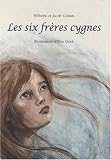
 par Wilhelm Grimm (Auteur), Jacob Grimm (Auteur), Elsa Oriol (Illustrateur) is better known as The Six Swans to us in English. I was thrilled to find so many illustrations from this book to share for it is a beloved tale, not often seen illustrated in picture books.


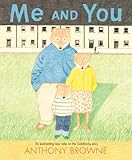
 by Anthony Browne as author and illustrator who has offered us interesting fairy tale visions in the past.


