Tuesday, May 10, 2011

Chris Hemsworth in 'Snow White and the Huntsman'?

I haven't seen Thor and doubt I will. John went to see it this past weekend, however, and had a good time but wasn't clamoring about it either. From 'Thor' Star Chris Hemsworth in Talks to Join Kristen Stewart in 'Snow White and the Huntsman' at the Hollywood Reporter:

Chris Hemsworth, coming off a $65 million dollar opening with his Marvel movie Thor, is in negotiations to star with Kristen Stewart in Universal’s Snow White and the Huntsman.

The negotiations with the Australian actor put the big-budget fairy tale adaptation back on track after it had some trouble hunting down its co-star.

Viggo Mortensen was in negotiations for the role in the winter but the on-again and off-again dealmaking never took root. Michael Fassbender was in the running before Mortensen while Hugh Jackman entertained an offer after Mortensen. The studio spend time casting a net, pulling in actors like Joel Edgerton, although nothing ever materialized on that front either.

Hemsworth, who began building buzz for his star-making role in Thor in the weeks before the movie’s release, began talks with Universal last week. The studio entered negotiations today.

This retelling of the Brothers Grimm fairy tale plays up the Huntsman, a secondary character in the centuries-old tale, who now becomes Snow White's protector and mentor.

Fairy-tale characters take the stand to teach children about the law


I haven't seen one of these articles in a while but they are appearing more frequently now. Must mean summer is coming for the fairy tale mock trials seem to come with the higher temperatures and longer days. This particular entry was especially fun.

From Fairy-tale characters take the stand to teach children about the law by Melissa Dribben:

The mock trials took place Friday, the final day of an annual celebration of the American legal system, coordinated by the Philadelphia Bar Association's young lawyers division. Judges Sandra Mazer Moss, Annette M. Rizzo, Sheila Woods-Skipper, Gary Glazer, Teresa Sarmina, Marlene Lachman, and Fox presided over the fairy-tale cases - fairy tale, in these instances, in its literary sense rather than indicating any bias for or against the validity of the plaintiffs' claims.

During the week, the association also arranged for volunteer lawyers to give free legal advice and information to library patrons; give high school students tours of the city's courts; and talk with students about careers in law.

The three pigs were represented by Todd Zamostien of the personal injury firm Saltz, Mongeluzzi, Barrett & Bendesky (which represents the plaintiffs in the duck-boat accident).

Wolf retained Beth Goodell, a defense lawyer from Community Legal Services.

On the witness stand, Wolf, a.k.a. Richard Vanderslice, who bought his hairy, sharp-clawed paws on Amazon.com, testified that he only was trying to make friends with the pigs and felt terrible that his sneezing blew down their homes.

Under questioning, he admitted that because he has no kitchen in his den, "I have to eat out a lot."

One of the tensest moments came when Wolf's physician, a Dr. Lupine, testified that her house was made of sticks and straw. This raised doubts among some astute jurors who wondered why a legitimate allergist would live in a building constructed of such noxious materials.

After deliberating for nearly 10 minutes in Common Pleas Courtroom 426, five of the six juries from the third-grade class from C.W. Henry School determined that Wolf neither intimidated the plaintiffs nor willfully destroyed their property. The sixth panel ended in a hung jury.

Juror Thomas McGill of Mount Airy tried to raise his hand and object during closing arguments, but was asked by the judge to wait.

After the trial, Thomas said he could relate to Wolf's predicament.

"I think B.B. Wolf is innocent because he has allergies," he said. "I have allergies, too!"

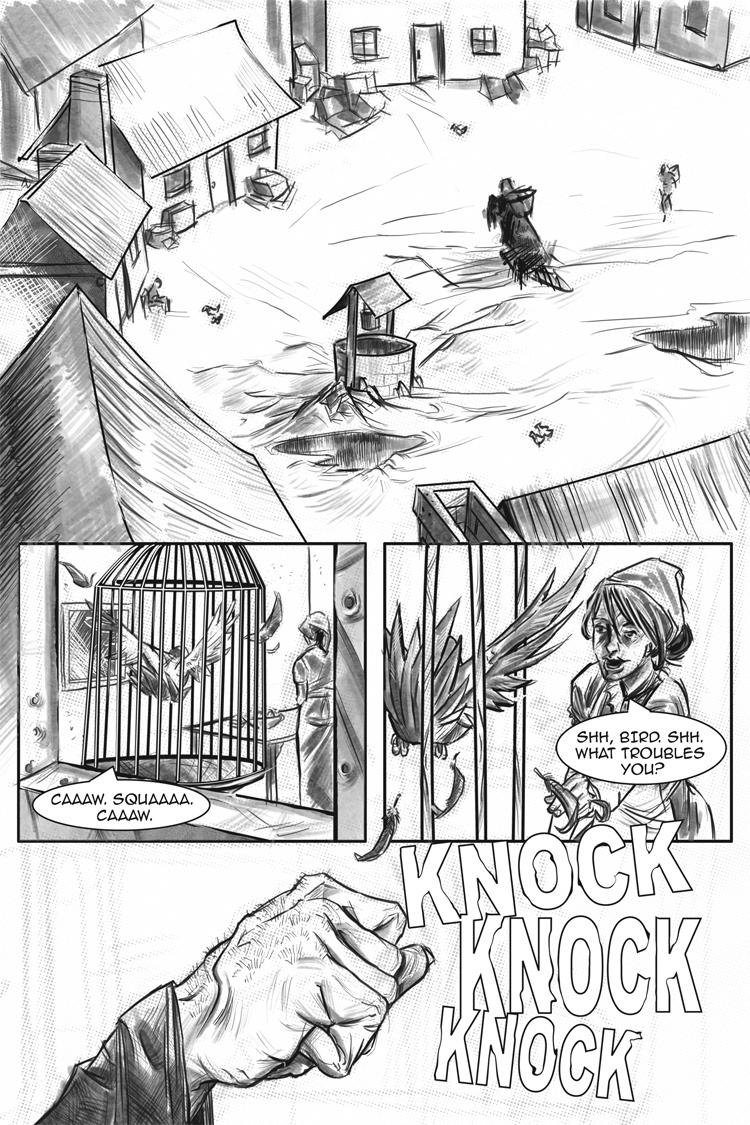
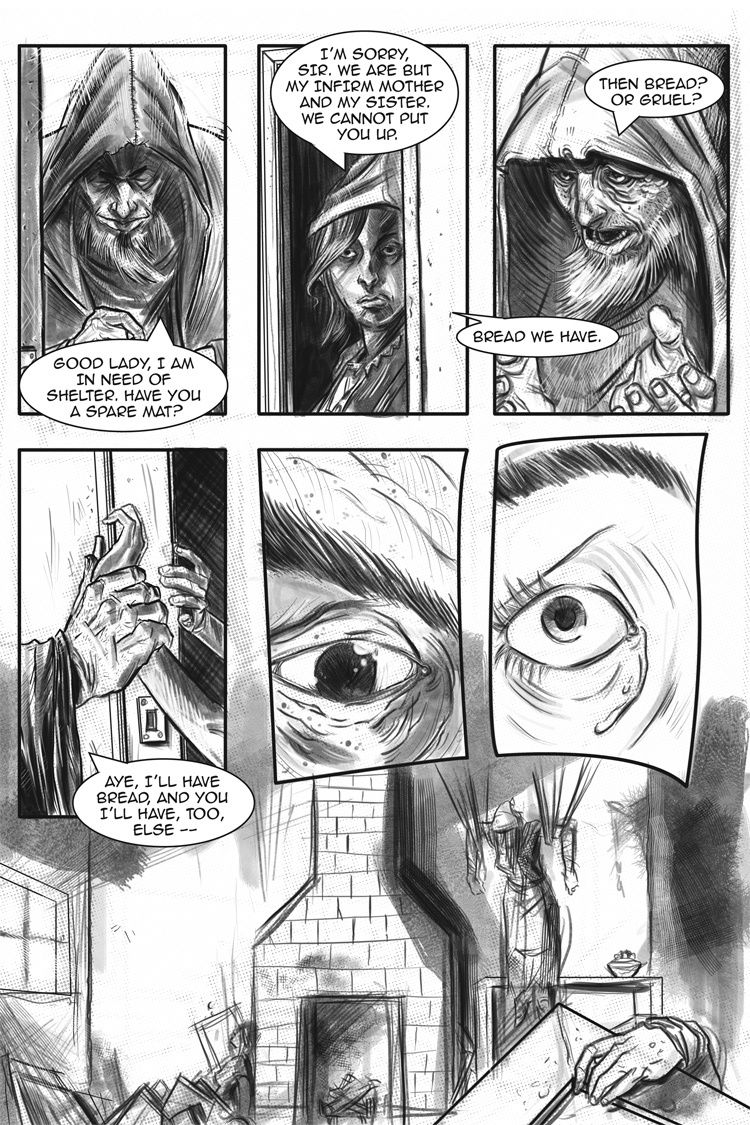
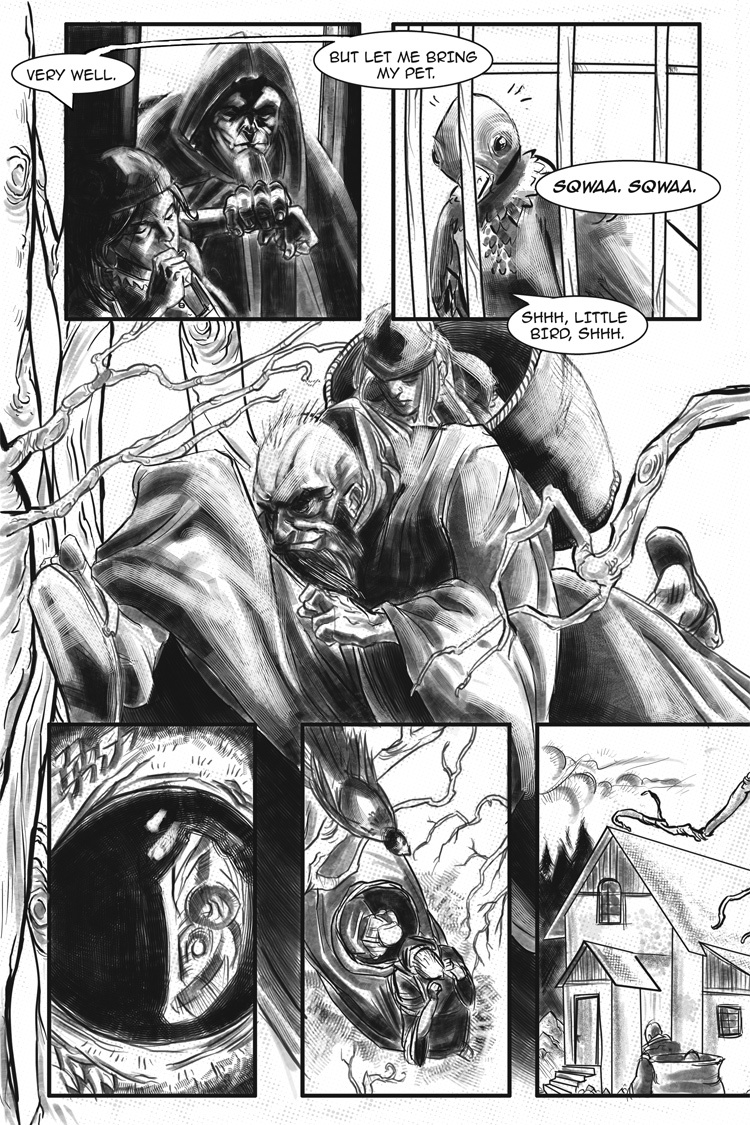
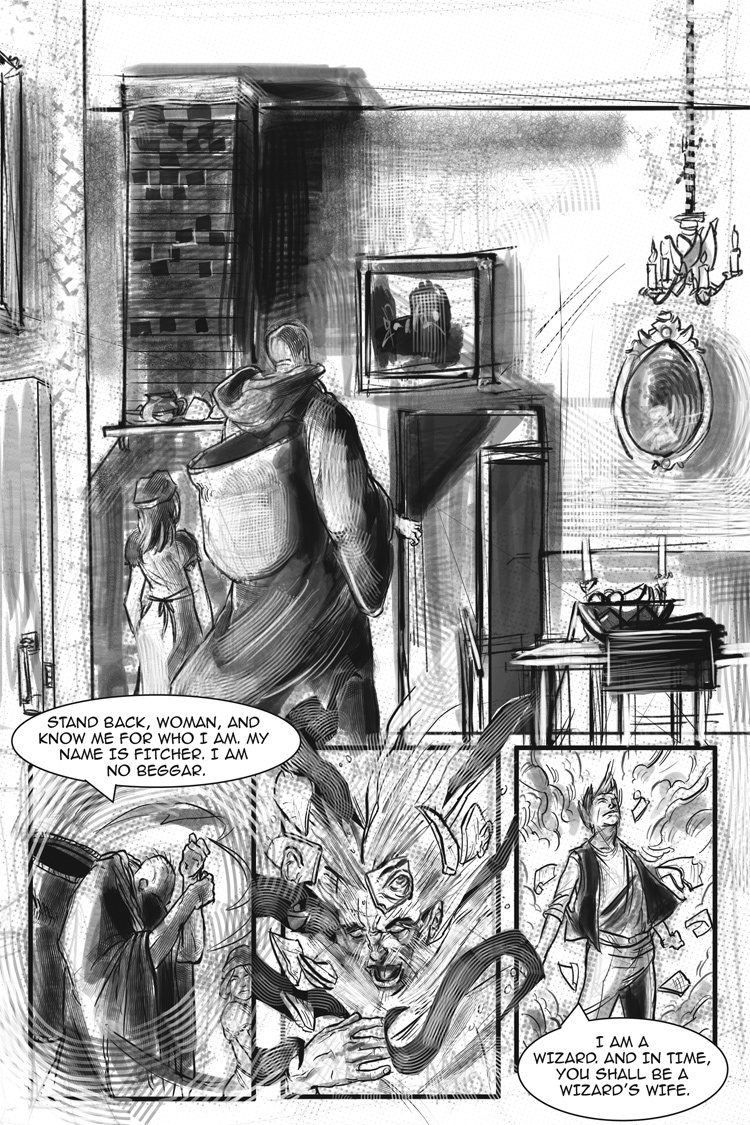
Fitcher's Bird Comic at SplitLipComic


I also discovered this 18 page online comic for Fitcher's Bird at SplitLipComic. I'll share the first four pages here and then leave it up to you to click through and see it all.


Fitcher's Bird Illustrations


Fitcher's Bird by Arthur Rackham


Since Fitcher's Bird from the Grimms is the best known tale in the ATU 311 group, I thought I would share some illustrations for it today. There aren't many for this tale is not as popular, but these are charming to look at.

Fitcher's Bird by Johnny Gruelle

Fitcher's Bird by Maurice Sendak


And more from around the web:


ATU 311: Rescue by the Sister


Bluebeard Tales From Around the World

Yesterday I discussed ATU 312, the first of three ATU tale types appearing in Bluebeard Tales From Around the World. Today I will briefly discuss ATU 311: Rescue by the Sister. There are 22 tales of this type in the collection. You can read some of them on SurLaLune as well as D. L. Ashliman's site.

From my introduction:

The second tale type, ATU 311: Rescue by the Sister, is also known as “How the Devil Married Three Sisters” as well as “Fitcher’s Bird,” the name of the variant in the Grimms’ Kinder- und Hausmärchen. In this tale group, a wealthy and mysterious gentleman woos or even kidnaps three sisters successively. When he brings the first one home, he gives her the keys to the castle as well as an egg. She is given full access to the castle but forbidden entrance into one room. While he is away, she opens the door and discovers the dead bodies of several women. She drops the egg which becomes stained with the blood in the room. When her disobedience is revealed, the gentleman kills her and places her in the room. The same sequence of events occurs with the second sister. When her turn arrives, the third sister receives the same instructions. She opens the door, too, but manages to avoid exposure by safely securing the egg. She then resurrects her sisters—or at least reclaims their bodies—and sends them home to their parents through wit and deception. Next she escapes through various subterfuges and eventually has the gentleman and his home destroyed as punishment for his crimes.

Note that curiosity and its consequences are sometimes presented in this group, but not often with as strong a moral against them as in ATU 312. The heroine here is not guilty for transgressing the restrictions placed upon her. She is heroic for rescuing herself and often her siblings as well.

I infinitely prefer this tale type over 312. I also prefer ATU 955 which I will discuss tomorrow. There has been some debate over the years whether this one should be lumped together with ATU 312 and not have its own classification. It is sometimes hard to distinguish between the two because the tales are closely related and often share many elements. But I prefer to separate them myself. It's not completely accurate, but in my brain I think of ATU 311 as the one in which the heroine rescues herself and often her siblings. In ATU 312 she most often does nothing to help herself besides wait for assistance. The heroine is rather unlikeable in ATU 312. She is greedy and foolish with no gumption. In ATU 311, you like her and even want to be her for she is smart and takes action to save herself and those around her.

This tale type is also the bridge between ATU 312 and ATU 955: The Robber Bridegroom for it shares traits with both while those two don't share as many traits beyond a murderous male(s).

And the real conundrum is why this tale has so often taken a back seat to Bluebeard. Historically, with Perrault's influence, we can understand when we see how passive fairy tale heroines grew in influence especially after Perrault's time and into the 1800s. But when I hear fairy tales once again bashed for being anti-feminist or such, I just remember my spunky ATU 311 heroine and I am happier.

Monday, May 9, 2011

ATU 312: Maiden-Killer (Bluebeard)


Bluebeard Tales From Around the World

Today’s Bluebeard post is about the types of tales that appear in Bluebeard Tales From Around the World. From my introduction to the book:

This collection presents a considerable number of tales of dangerous suitors, robbers, wife-killers, cannibals, and overall monsters from our literary history. Most of the tales may be classified as either ATU 312: Maiden-Killer (Bluebeard), ATU 311: Rescue by the Sister, or ATU 955: The Robber Bridegroom, all of which are usually considered together in Bluebeard studies. Some of the tales do not easily fit into any of these three tale types, but merit inclusion for their similarities to the group presented here. I have not sorted them by tale type in the table of contents although a guide at the end of the book provides some classification help despite the various challenges of tale typing many of the stories.
And tale typing is not anything I like to do on a regular basis as much as it is helpful in creating collections like these. Overall, European tales, which dominate the collection, slide into categories much easier than tales from Africa and India. And many of these tales were collected before Aarne thought up the original incarnation of the tale type system. Thompson and Uther have refined it since, but it is a tricky business. I am no expert at it by any means although I have played in the sandbox often enough.

Needless to say, ATU 312 is the Perrault Bluebeard type, it draws its primary example from Perrault and the closely related tales. And this type is easier to trace since there aren’t any strong examples of this tale before Perrault set it down on paper. Not to say that it is the oldest known tale in the larger group, for tales in the ATU 311 and 955 groups predate Perrault’s Bluebeard of 1697. But the specific elements found in Perrault’s Bluebeard aren’t seen previously in literary history. And since the oral isn’t recorded we can only make assumptions about what existed before.

Again from my introduction:

In “La Barbe bleue,” a rich nobleman with a distinguishing blue beard courts and marries a woman who doesn’t appear to care much for him but appreciates his wealth. Before leaving on a journey, Bluebeard gives his wife the keys to the castle and encourages her to explore it with her visiting friends. However, he forbids her entry into one single chamber opened by a certain golden key and threatens a horrible punishment if she disobeys him. During his absence, the wife succumbs to curiosity’s temptation and opens the chamber door. Within she discovers the bodies of Bluebeard’s previous wives. In her horror, she drops the key which is consequently stained with blood and will eventually reveal her disobedience. Upon discovering her betrayal, Bluebeard states he will kill her and gives her a few moments to prepare for death. During this short span of time, the wife’s sister Anne watches for their brothers’ arrival, hoping they will arrive in time to rescue their sister from her gruesome fate. The brothers arrive in time and slay Bluebeard. The wife inherits his wealth and lives happily ever after.

The emphasis in this tale is upon the wife’s fatal curiosity—often likened to the Biblical Eve and mythological Pandora—with sexual overtones concerning the key and the blood. Bluebeard is rather sympathetic in this version, a man betrayed by his wife, although his murderous philosophy earns him a death sentence.

Bluebeard’s restriction and the wife’s transgression in this group have provided much fuel for various interpretations of this tale. Throughout most of the tale’s fascinating history, the wife’s “betrayal” has been emphasized over Bluebeard’s murderous behavior which is almost justified, but not quite, since he does die for his own sins. In one popular reading, the bloody key and opened chamber are seen as sexual betrayal as well as a moral sin. There isn’t as much discussion of Bluebeard’s proclivities or outright entrapment of his wives. In modern times, compelling questions help to downplay those interpretations that condemn the heroine. After all, how did the first wife die? Who would want to live with a murderer and should anyone be expected to do so?
Tomorrow I will talk more about ATU 311 which I definitely prefer since it has more "girl power" in it. I don't have definite reasons why Bluebeard has dominated the group, but it is the most disturbing by modern feminist standards, one of the reasons I think it has decreased in popularity in recent decades. We are not quick to condemn female curiosity or power these days, thank goodness.

And, of course, you can also read an annotated version of the tale, the one that started it all on SurLaLune.

The Firebird Ballet at Tales of Faerie


The Firebird in Full Score (Original 1910 Version) Firebird. Ballet fairy tales and legends / Zhar-ptitsa. Baletnye skazki i legendy Firebird (Fairy Tales, Book 1) 

Kristin at Tales of Faerie had a wonderful entry on the Firebird Ballet last week and I wanted to make sure no one missed it. It even had a little extra for me in it--Kristin doesn't know this--because she mentions Maria Morevna as a reverse Bluebeard tale, which it is of sorts, meaning flipped genders--and thus was included in Bluebeard Tales From Around the World because it is often mentioned as such in Bluebeard discussions. But this really isn't a Bluebeard entry, it is a Firebird Ballet entry.

Firebird Firebird The Tale of The Firebird


You have to go over to her blog to read it all, but here's the start to tantalize you into doing so. I have never seen this ballet performed and would love to do so. Over time I have gotten several of the other romantic fairy tales ballets off my list from Swan Lake to Sleeping Beauty to Coppelia to Cinderella but Firebird has proved elusive in the areas I've lived. Of course, I was enough of a balletomane as child to forever think of Maria Tallchief in the role.
I had mentioned, a while ago, that the plot for the Firebird ballet was a combination of Russian fairy tales, but what are the fairy tales the ballet drew from?

The ballet basically took two common characters found in Russian folklore, Koshchey the Deathless and the Firebird.

The villain of the ballet is Koshchey, who holds ten young princesses captive. The Russian tale "Koshchey the Deathless" tells of the hero, Ivan, who goes in search of the Princess he knew of from the lullabies his nurses sang to him. The compassion he has on a man being flogged (Bulat the Brave) results in Bulat accompanying him on a series of quests, basically doing everything for him, including freeing the Princess Vasilisa from Koshchey and finding his death, to kill it. The death itself is in an egg in a duck in a hare in a coffer under an oak on an island in the sea. In the ballet they simplified it to just being an egg he has to smash.
Kristin links to one of the tales on SurLaLune, but there are three Russian Fairy Tale collections hidden away on SurLaLune if you want to read more Russian tales.


The Firebird Suite  Igor Stravinsky: The Firebird (Complete Ballet, 1910) / Alexander Scriabin: Prometheus - The Poem of Fire - Valery Gergiev / Kirov Orchestra, St. Petersburg / Alexander Toradze

Stravinsky and the Ballets Russes: The Firebird/Le Sacre du Printemps Stravinsky - The Firebird & Les Noces / Royal Ballet

Ballet Costume for "The Firebird," by Stravinsky Giclee Poster Print by Leon Bakst, 24x32
Poster of a Costume Design
Related Posts Plugin for WordPress, Blogger...
hostgator discount